

Why is Agility Training Important?
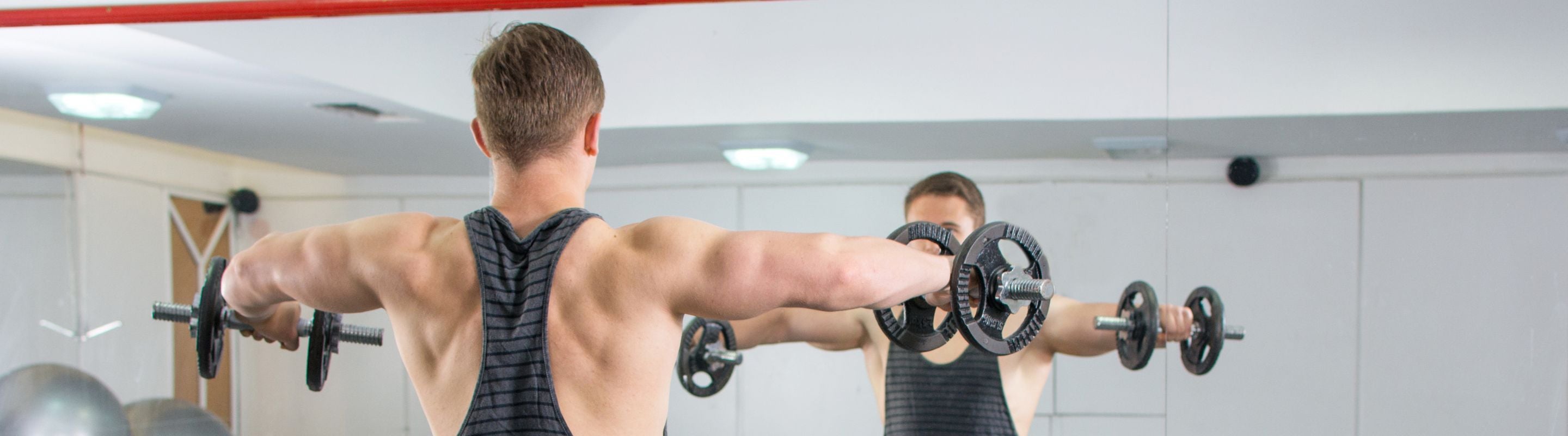
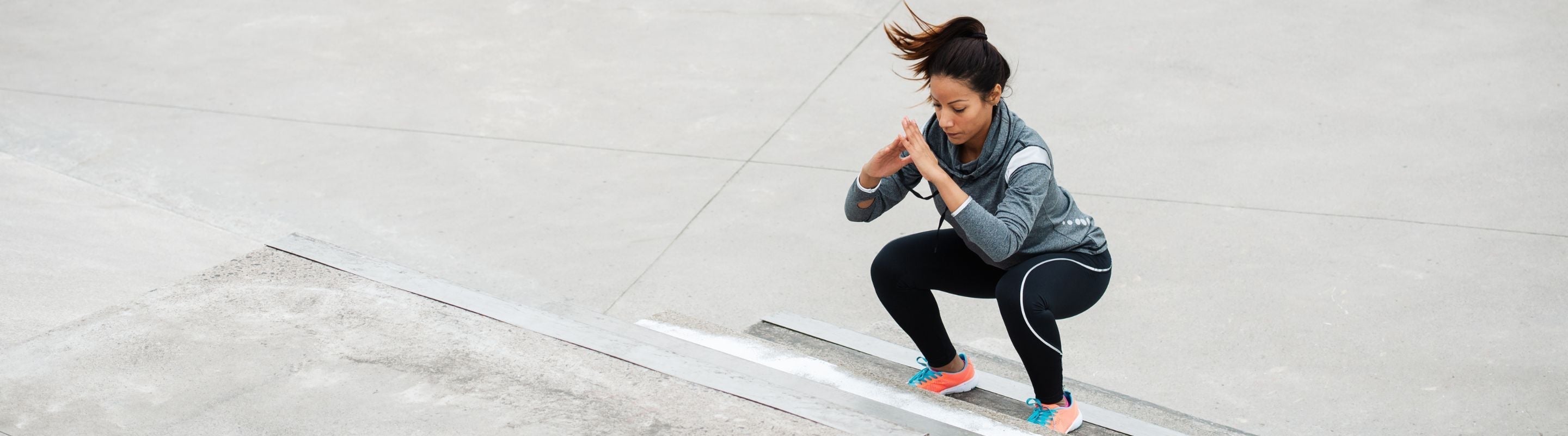
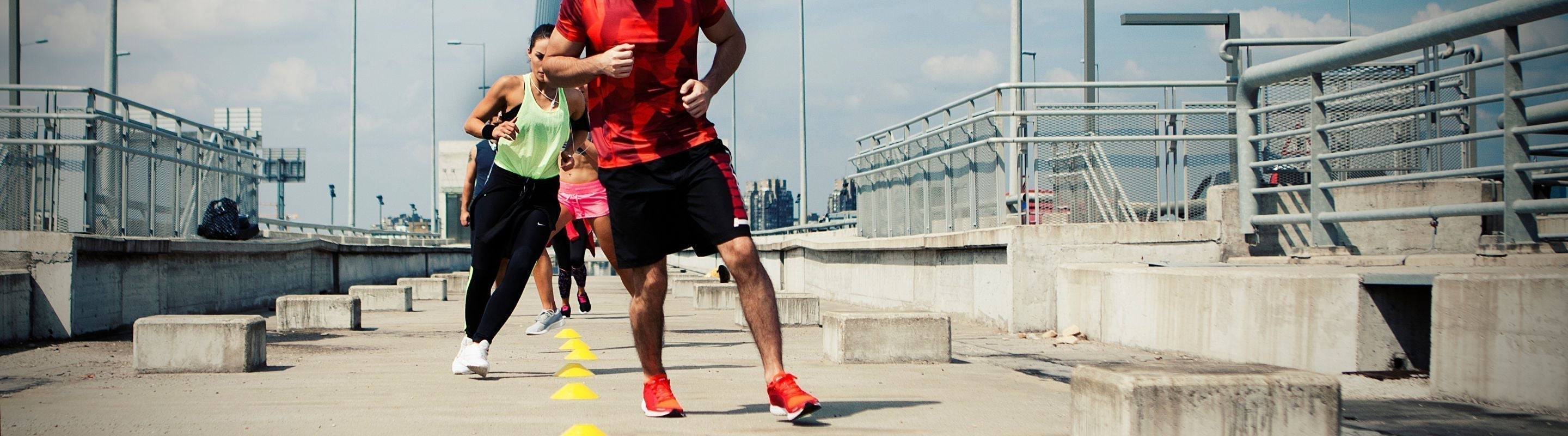
Agility is crucial for balance, coordination, and sports performance. On the field or court, just a few milliseconds or millimetres can make or break you. The agility drills we outline below will help build your bodily awareness, improve reaction time, and boost strength so you're always at your best.
They're also a great addition to a gym warm-up routine or general exercise routine, helping you avoid pain or injury.
Your Agility Drill
Quick Feet
- Stand facing the exercise step with your feet spread hip-width apart
- Activate your core by pulling your belly button toward your spine
- Keep your spine neutral throughout the exercise
- Step up onto the step first with one foot and then the other
- Step down in the same fashion - first with one foot and then the other
- Start with a 30-second set and work your way up from there
- Start at a slow pace to get accustomed to the movement, then speed up as your ability allows
Step Up Plus
- Stand in front of your step with your feet hip-width apart.
- Step up onto the step with one foot and follow by forcefully lifting the opposite knee toward your chest.
- Step down and back on each foot.
- Repeat with the opposite leg.
- Continue alternating the legs and adjust your pace as your ability allows.
- To ensure you’re doing the exercise safely, avoid these common mistakes:
- On the leg you’re stepping up with, don’t let your knee pass your toes. If it passes the toes, you put unnecessary pressure on the knee.
- On a similar note, the knee should hover over the second and third toes. Avoid too much of an inward or outward bend.
- You may need to lean forward for balance, but do not slouch or round your back.
Jumping Lunges
- Stand in an area with enough legroom and a non-slippery surface.
- Place your right foot forward and your left foot back, and lower yourself into a lunge. Place your hands on your hips, and ensure your core is activated and your spine remains in a nice, neutral position. This is your starting position.
- Jump up using both legs.
- While in the air, switch your legs so the left one is in front and land back down in a lunge.
- Repeat 5-10 times in 2-3 sets, as your ability allows.
Box Jumps
- Stand upright with your feet spread hip-width apart while facing the box.
- Squat down for more momentum and jump onto the box, swinging your arms forward for better balance.
- Keep your hips and knees bent while landing to limit impact force.
- Ensure that your knees remain over your ankles and behind your toes at landing.
- Step down and repeat as your ability allows.
Step Ups Split
- Begin this exercise in the push-up position with your hands on either side of an exercise step. Place your feet at or slightly wider than shoulder-width apart for better balance.
- Maintain a straight line alignment between your ankles, knees, hips, and shoulders.
- Rise onto the step first with one hand and then the other, keeping your elbows only slightly bent.
- Step down from the step in the same fashion.
- Perform the exercise at a pace consistent with your ability.
- One up-and-down step of each hand counts as a single repetition.
- Relax and repeat 8-12 times for 2-3 sets or according to your clinician's recommendation.
Plank Taps
- Begin in a pushup position with your hands underneath your shoulders, legs stretched out behind you, and feet shoulder-width apart. Your body should form a straight line from your head through your shoulders, back, hips and legs.
- Shifting your weight to maintain your balance, lift one hand to touch your opposite arm at or just below your shoulder. Pause briefly, then return your hand to the mat.
- Switch to the other side, bringing your other hand up to tap the opposite arm, then return it to the mat. This completes one repetition. Concentrate on maintaining your form and engaging your core during each movement.
- Complete 10-15 reps before resting, or set a timer to see how many you can complete in one minute.
Lateral Step Overs
- Get five cones or water bottles and position them in a straight line, 20-25 cm apart.
- Stand sideways to the cones and lift the leg closest to them. This is your starting position.
- Rise onto your toes and step sideways over each cone, lifting your knees high enough not to knock them over.
- When you reach the end of the line, pause for a second in the starting position, then step in the other direction.
- Repeat as your ability allows.
Lateral Jump Ups
- Stand to the left of the exercise step
- Engage your core and lift your left foot off the ground
- Jump onto the step, landing only on your right foot
- Jump back down, still standing only on one leg
- Repeat 10 times in three sets or as your ability allows (or as instructed by your clinician)
- Repeat for the other side.
Boost Your Agility Training

Sports Ankle Support
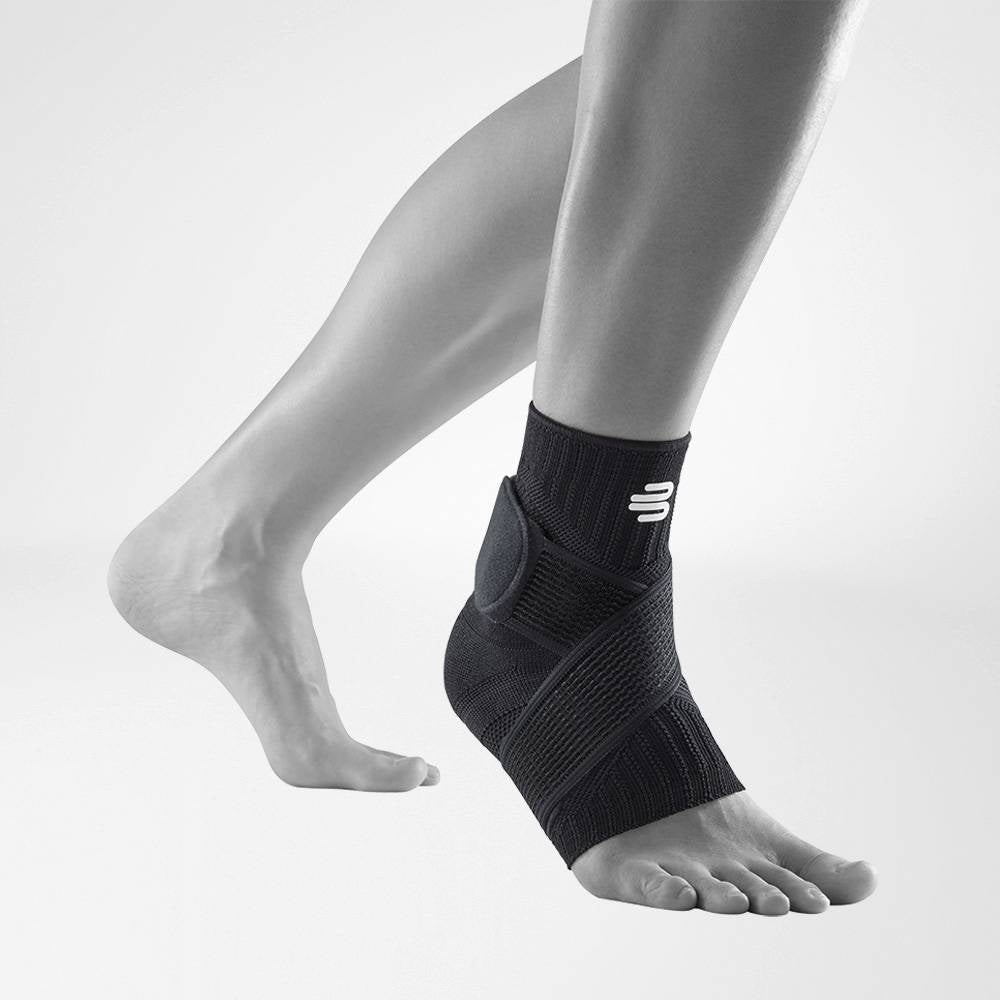
Sports compression is a great way to minimise fatigue during your drills and improve your overall proprioception. Our supports work by stimulating muscle activity, thereby boosting circulation and bodily awareness, and reducing the risk of injury. Depending on your sport and preference, you can try out our:
- Performance Socks for soccer or running
- Sports Ankle Support for general stability and protection from sprains
- Thigh Sleeves for rugby or gym
- Arm Sleeves for weightlifting or gymnastics
- Sports Elbow Support for golf or tennis
All of our sports supports are breathable and moisture-wicking with non-slip grips for maximum comfort.