

The Ideal Strengthening Routine
To build strength, you’ll need to commit to 10 sets per muscle group per week. Depending on your schedule, you can split this between 2 and 4 days, ideally leaving at least 6 hours between your running and training sessions. At the very least, cross-train core and upper body on the same day as a run to give your legs some time to recover.
To build strength and endurance, you’ll want to mix isometric and plyometric exercises. For isometric exercises, you’ll also need to work with progressively heavier weights, quicker reps, longer holds, and/or increased ROM (e.g., squat depth) to challenge your muscles and grow them stronger.
Last but not least, you don’t just want to train the “running muscles.” In addition to your calves, quads, and hamstrings, you need to target other groups, like the core, upper back, and glutes. Training these will help you avoid muscle imbalances, minimise back pain, and improve your running posture and biomechanics. Remember, power in the legs and arms can be enhanced or limited by that in the core.
Single Leg Squat Touch
- Stand up straight on a yoga mat.
- Lift your right foot off the floor, extend your leg behind you, and soften your left knee.
- Activate your core.
- Inhale and squat down as far as possible on your left leg, reaching your left hand toward the floor. When you've squatted as far as you can, bend from the hips to touch the ground with your left hand.
- Keep your back neutral throughout.
- Exhale, squeeze your glutes and rise up to complete one rep.
- Complete 10-15 reps and repeat for the other side.
Plank with Hip Extension
- Lie on your belly on an exercise mat.
- Prop yourself up on your elbows, ensuring the elbows are directly under your shoulders and your hands are in a neutral position, shoulder-width apart.
- Activate your core, lift your hips off the floor, and flex your toes so you’re standing on the balls of your feet. Your body should be in a straight line from the feet to the head.
- Tuck your pelvis in to help keep your spine nice and neutral throughout the plank hold.
Step Up Plus
- Stand in front of your step with your feet hip-width apart.
- Step up onto the step with one foot and forcefully lift the opposite knee up toward your chest.
- Step down and back on each foot.
- Repeat with the opposite leg.
- Continue alternating the legs and adjust your pace as your ability allows.
- To ensure you’re doing the exercise safely, avoid these common mistakes:
- On the leg you’re stepping up with, don’t let your knee pass your toes. If it passes the toes, you put unnecessary pressure on the knee.
- On a similar note, the knee should hover over the second and third toes. Avoid too much of an inward or outward bend.
- You may need to lean forward a bit for balance, but do not slouch or round your back.
Step Up Lunge
- Stand before a curb, aerobic step, or another elevated surface.
- Leave enough space between your feet and the step so you’ll need a long stride to reach the step.
- With your left leg supporting you, step onto the step and into a lunge with your right leg.
- Push yourself up with your right leg and return to the starting position.
- Repeat with the left leg.
- Do 10-15 reps per leg in 2-3 sets, depending on your ability.
Russian Twists
- Sit on an exercise mat with your heels on the floor, knees bent, arms behind your head, and elbows pointing outward.
- Engage your core and lean your torso back to create a V shape with your legs.
- Puff out your chest and shift your shoulders back and down. The back should stay straight throughout the exercise.
- Engage your core as you twist side to side.
- Breathe deeply. Exhale with each twist and inhale when returning to the centre to complete the repetition.
- Complete ten reps on each side and repeat these sets according to your ability.
Plank Taps
- Begin in a pushup position with your hands underneath your shoulders, legs stretched out behind you, and feet shoulder-width apart. Your body should form a straight line from your head through your shoulders, back, hips and legs.
- Shifting your weight to maintain your balance, lift one hand to touch your opposite arm at or just below your shoulder. Pause briefly, then return your hand to the mat.
- Switch to the other side, bringing your other hand up to tap the opposite arm, then return it to the mat. This completes one repetition. Concentrate on maintaining your form and engaging your core during each movement.
- Complete 10-15 reps before resting, or set a timer to see how many you can complete in one minute.
Split Squats
- Stand with your feet spread hip-width apart.
- Reach back with the foot of the leg not being exercised and place it on the step.
- From this position, the lead leg will bear most of your weight.
- From the described position, squat down with your front leg until the knee is bent at 90 degrees. Pause briefly at the bottom of the motion before slowly returning to the starting position. Perform both the upward and downward movements in a controlled fashion.
- Relax and repeat as your ability allows.
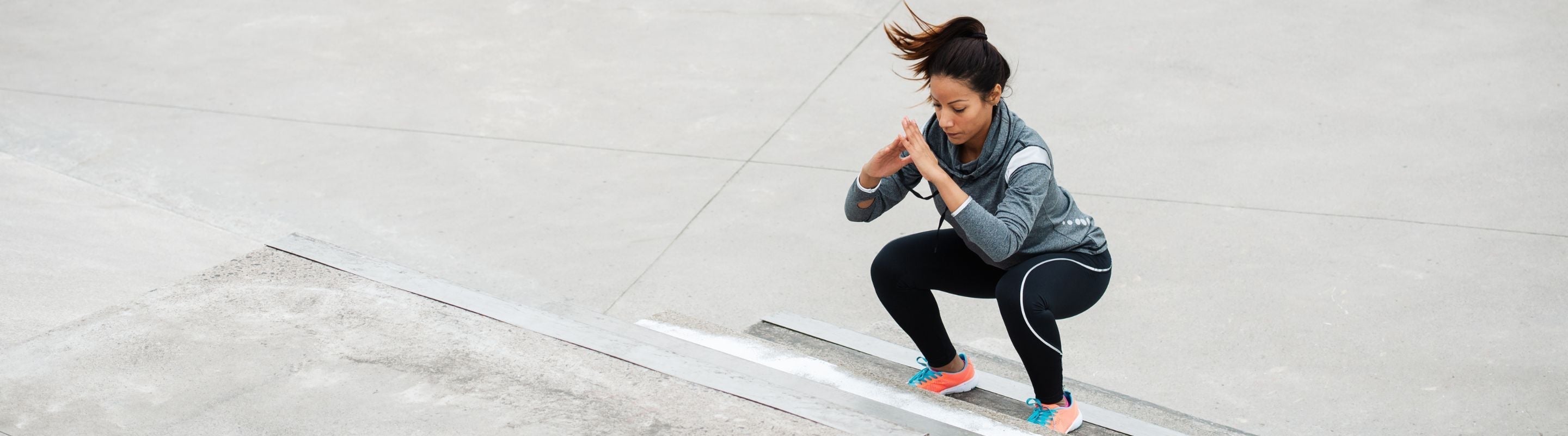
Jump Squats
- Stand up straight with your feet shoulder-width apart and knees slightly bent. You should wear sports shoes with a bit of squish and spring or exercise on a soft surface like a carpet to absorb some of the shock.
- Bend at the knees and hinge forward at the hip to get into a squat.
- Activate your core and propel yourself off the floor using the power in your quads, glutes, calves, and hamstrings. With the legs fully extended, the feet will be a few inches off the floor. You can swing your arms over your head or down to your sides as you jump.
- Land as softly as you can. Land first on the balls of your feet, then distribute the shock through the arches and the heel.
- Right after landing, coil back into a squat and jump again.
Push Up Burpees
- Start in a squat position with your knees bent, your back neutral, and your feet shoulder-width apart.
- Drop your hands to the floor before you so they’re just inside your feet.
- Shifting your weight into your hands, kick your feet back so you’re on your hands and toes in a pushup position.
- Do one pushup while keeping your body aligned from head to heels. Remember not to let your back sag or to stick your butt in the air.
- Do a frog kick by jumping your feet back to the frog squat.
Stand and reach your arms over your head. - Jump quickly into the air so you land back where you started.
- As soon as you land with your knees bent, get into a squat position and do another repetition.
Plank Rows
- Grab a couple of dumbbells (2-5 kg, depending on your ability) and get on a yoga or exercise mat.
- Get into the high pushup position with hands firmly gripping the dumbbell handles.
- Ensure your body forms a straight line from your ankles to your head. Tuck your pelvis in and activate your core by pulling your belly button toward your spine.
- Raise one dumbbell off the mat by bending your elbow and pulling the dumbbell in toward your ribs.
- Pause briefly at the top of the motion before returning to the starting position.
- Start with 8 repetitions per arm in 2-3 sets and gradually work your way up.
Standing Rows
- Hold one end of the tube or band in each hand. While standing with your feet spread hip-width apart, squat slightly and stabilise your spine by contracting your core muscles.
- Squeeze your shoulder blades together and slowly pull the resistance band toward your ribs.
- While gripping the resistance band tight, slowly return your arms to the start position.
- Do 10 reps in 3 sets.
- Grab a band with more resistance, or increase your reps for more of a challenge. For less of a challenge, do the opposite.
Stability Ball Flys
- Grab some dumbbells appropriate to your strength level and an exercise ball that is about knee height or slightly above it.
- Sit on the ball and roll down until your body and upper legs parallel the floor. Your knees should be bent at about 90 degrees, and your feet should be flat on the ground about shoulder-width apart.
- With your elbows slightly bent, lower your arms to the sides until you feel a slight stretch in your chest. At the bottom of the position, your palms should face upward.
- Lift your arms back above your chest, engaging your pecs and core
Repeat for 10 reps in 3 sets or as your ability allows
Maximise Your Training and Running Efficiency
Compression supports and sports insoles can be perfect running partners. Both work to improve sensotimotor function, which can in turn enhance running efficiency and reduce risk of injury.
Compression supports:

- Boost circulation and venous return, letting more oxygen and nutrients get into your muscle fibres, thus improving your endurance.
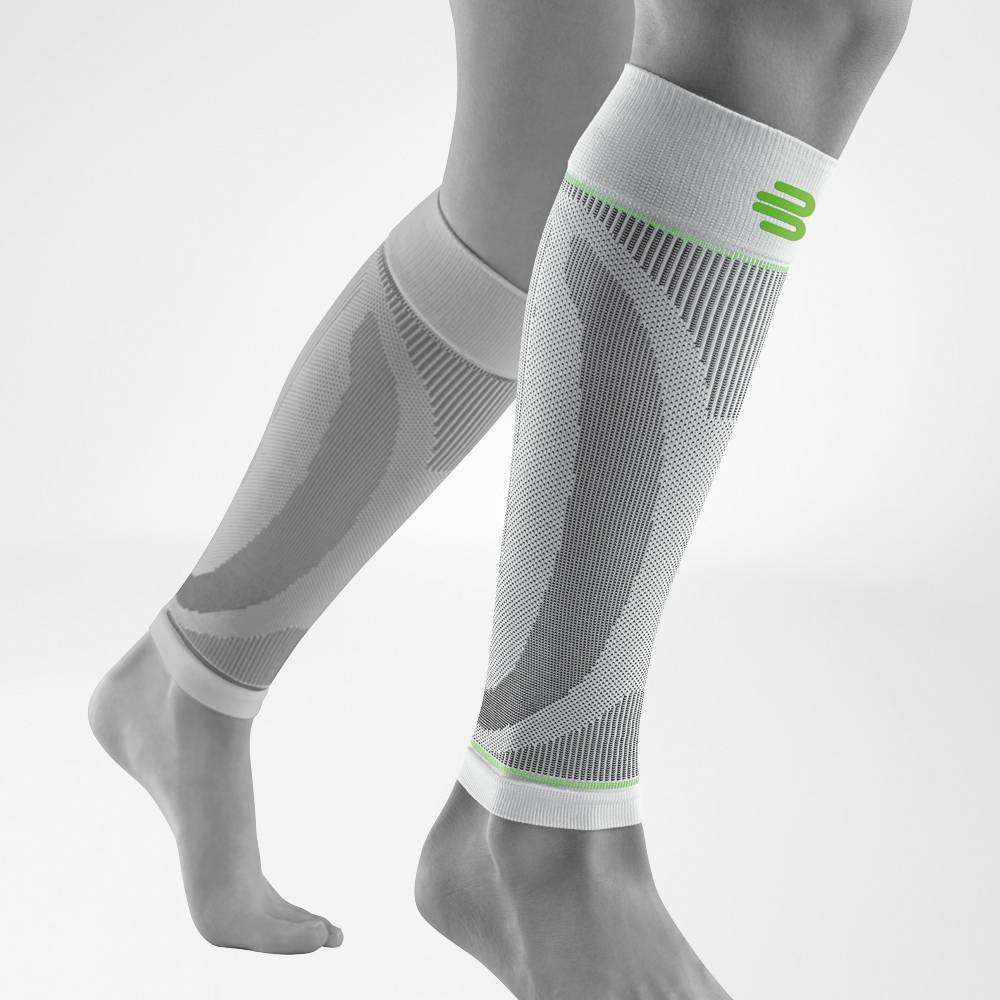
- Lower leg garments reduce oscillations, which are the uncomfortable vibrations shooting up the leg with every landing. Over time, these can cause micro damage in the muscle, leading to pain.
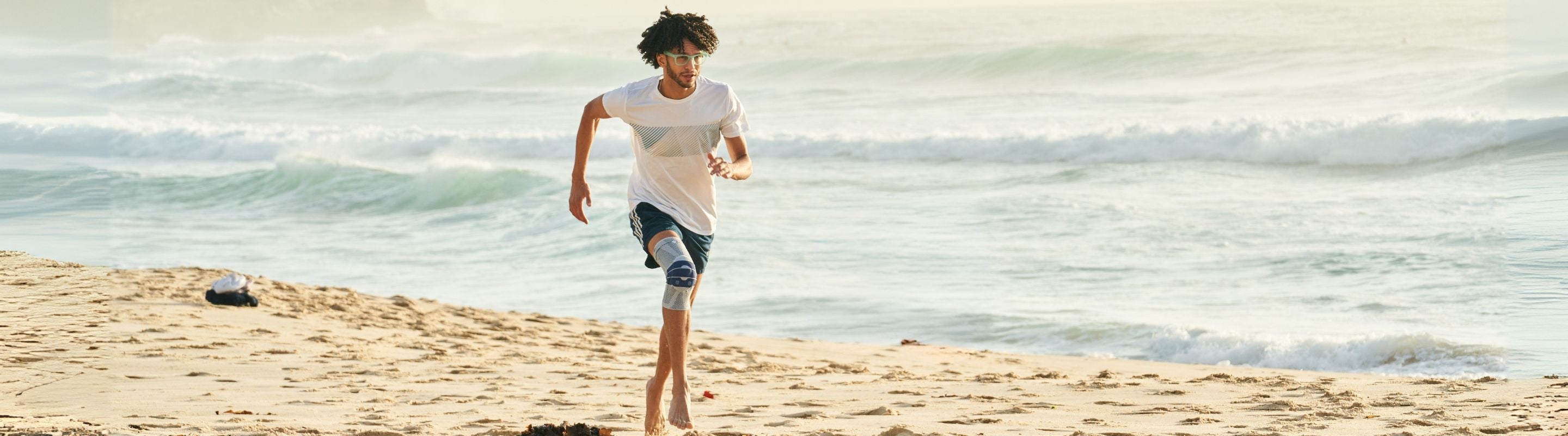
The ideal picks for runners include the Sports Knee Support, Sports Back Support, and Sports Compression Calf Sleeves.
Insoles
- Shown to reduce the risk of stress fractures, which account for around 20% of injuries sustained by runners.
- Improve foot biomechanics and support the arch and the natural roll of the foot, leading to better load distribution.
The Run Performance Insoles are perfect for slipping into your favourite pair of running shoes.